
Advancements in Clinical Psychiatry

Latest Advancements in Coercion Reduction
29 June 2026
Reducing violence and coercion in mental health care remains one of the most important challenges facing mental health services worldwide. Encouragingly, the latest research shows that meaningful reductions in restrictive practices are achievable when organisations adopt whole-system, evidence-informed approaches that prioritise collaboration, staff support, and the rights of people using services.
What does the latest evidence tell us?
Recent systematic reviews, umbrella reviews and randomised studies consistently demonstrate that no single intervention is sufficient to reduce violence or coercion. Instead, the strongest evidence supports multicomponent organisational programmes that combine:
- leadership commitment and organisational culture change
- staff education and de-escalation training
- trauma-informed and recovery-oriented care
- collaborative decision-making and patient involvement
- routine monitoring and use of data to drive improvement.
While de-escalation training has been shown to reduce aggression and restraint in acute inpatient settings, the evidence is less consistent for stand-alone interventions such as sensory rooms or isolated communication strategies. The message is clear: sustainable change depends on embedding multiple interventions within everyday clinical practice rather than relying on individual techniques alone.
Emerging priorities for research, policy and practice
Several themes are shaping the future direction of the field.
- First, there is increasing recognition that reducing coercion is fundamentally a human rights issue, closely aligned with recovery-oriented, person-centred and trauma-informed models of care. International policy continues to emphasise reducing restrictive practices while promoting safety, dignity and therapeutic relationships.
- Second, researchers are calling for better international measurement and benchmarking. Current rates of seclusion, restraint and other restrictive practices vary considerably between countries, partly because services measure and report these practices differently. Developing common indicators will enable more meaningful international comparisons and support quality improvement.
- Third, there is growing emphasis on co-design and lived experience leadership. Increasingly, people with lived experience are working alongside researchers, clinicians and policymakers to develop interventions, improve crisis planning and strengthen implementation efforts.
Important evidence gaps
Despite encouraging progress, important questions remain unanswered.
More high-quality research is needed in:
- forensic mental health settings
- child and adolescent services
- community mental health care
- long-term sustainability of interventions
- implementation of evidence into routine practice.
Future research should also evaluate organisational culture, staff wellbeing, patient experience and long-term outcomes, rather than focusing solely on reductions in restrictive practices.
Key publications
Several influential publications have shaped current understanding of violence and coercion reduction, including:
- Barbui et al. (2020) – Umbrella review of randomised evidence demonstrating the strongest support for multicomponent interventions and staff training to reduce coercive practices.
- Čelofiga et al. (2022) – Cluster randomised trial showing that structured de-escalation training significantly reduced aggression and restraint in acute psychiatric settings.
- Savage et al. (2024) – International comparison highlighting the need for standardised measurement and benchmarking of restrictive practices across countries.
Looking ahead
The evidence continues to move in a positive direction. Across countries and healthcare systems, there is growing consensus that reducing violence and coercion requires sustained organisational commitment, multidisciplinary collaboration, robust implementation strategies, and meaningful partnership with people who have lived experience.
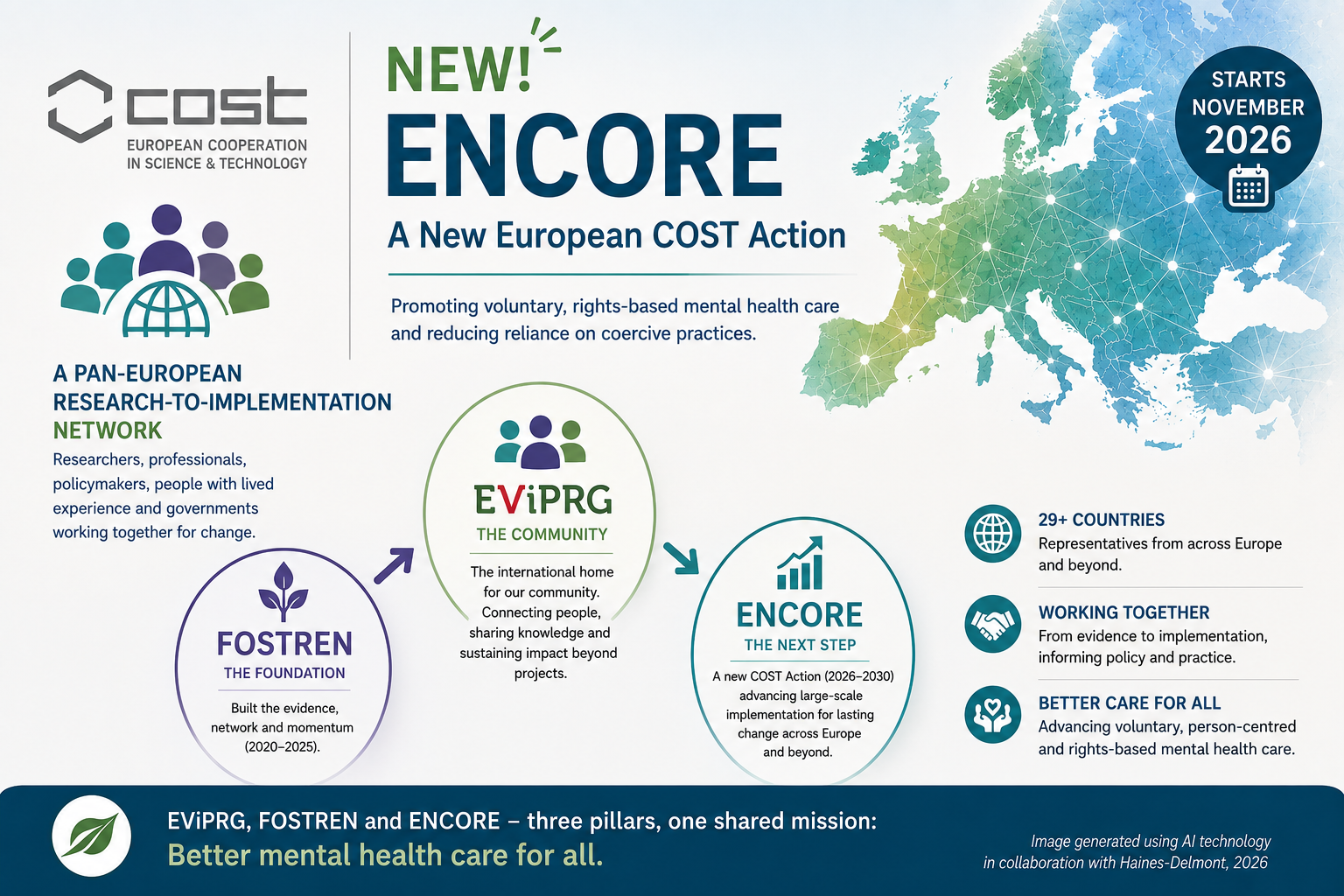
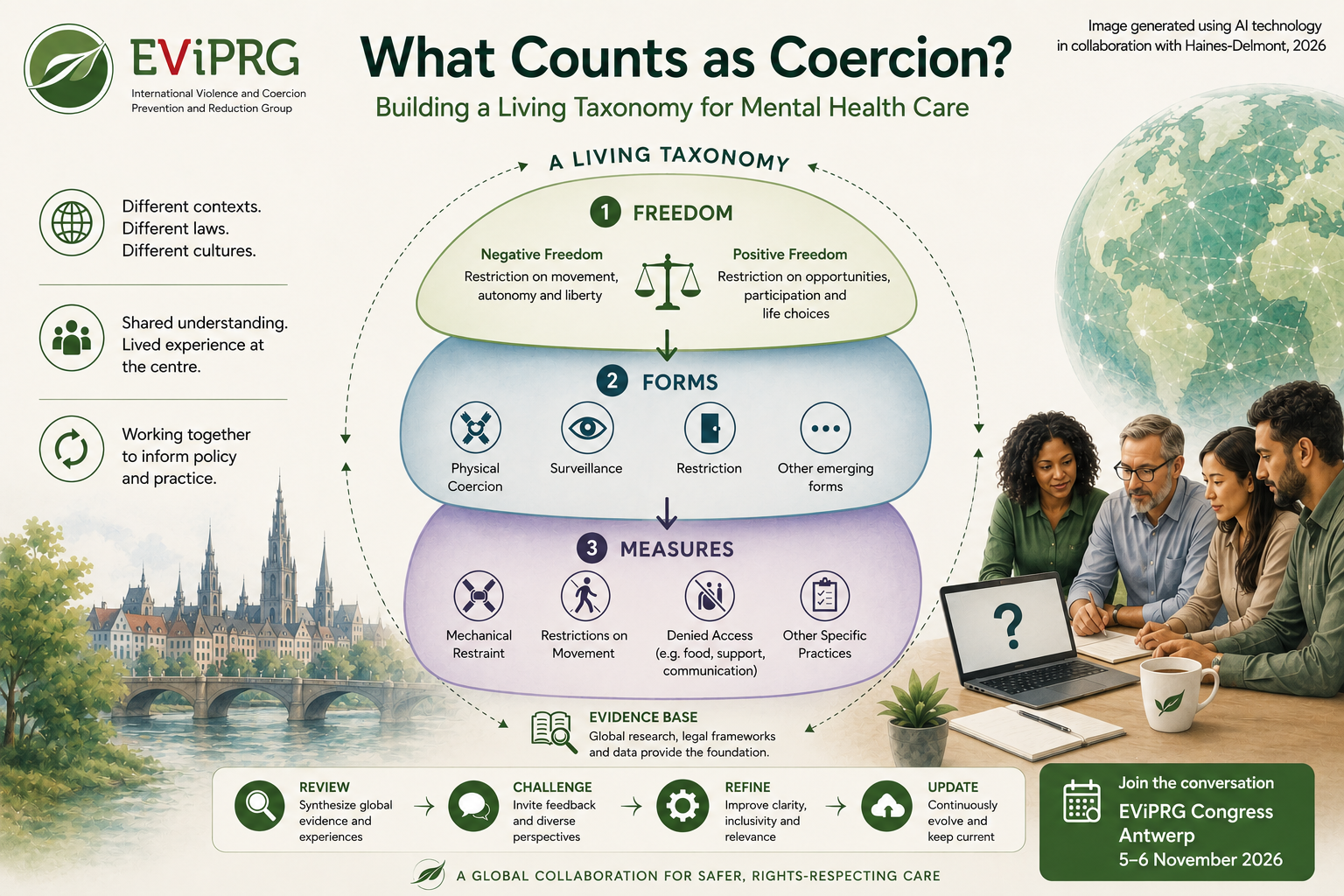
At EViPRG, we are committed to supporting this work by bringing together researchers, clinicians, educators, policymakers and people with lived experience to share evidence, develop collaborations, and promote rights-based approaches to mental health care worldwide.
Other News

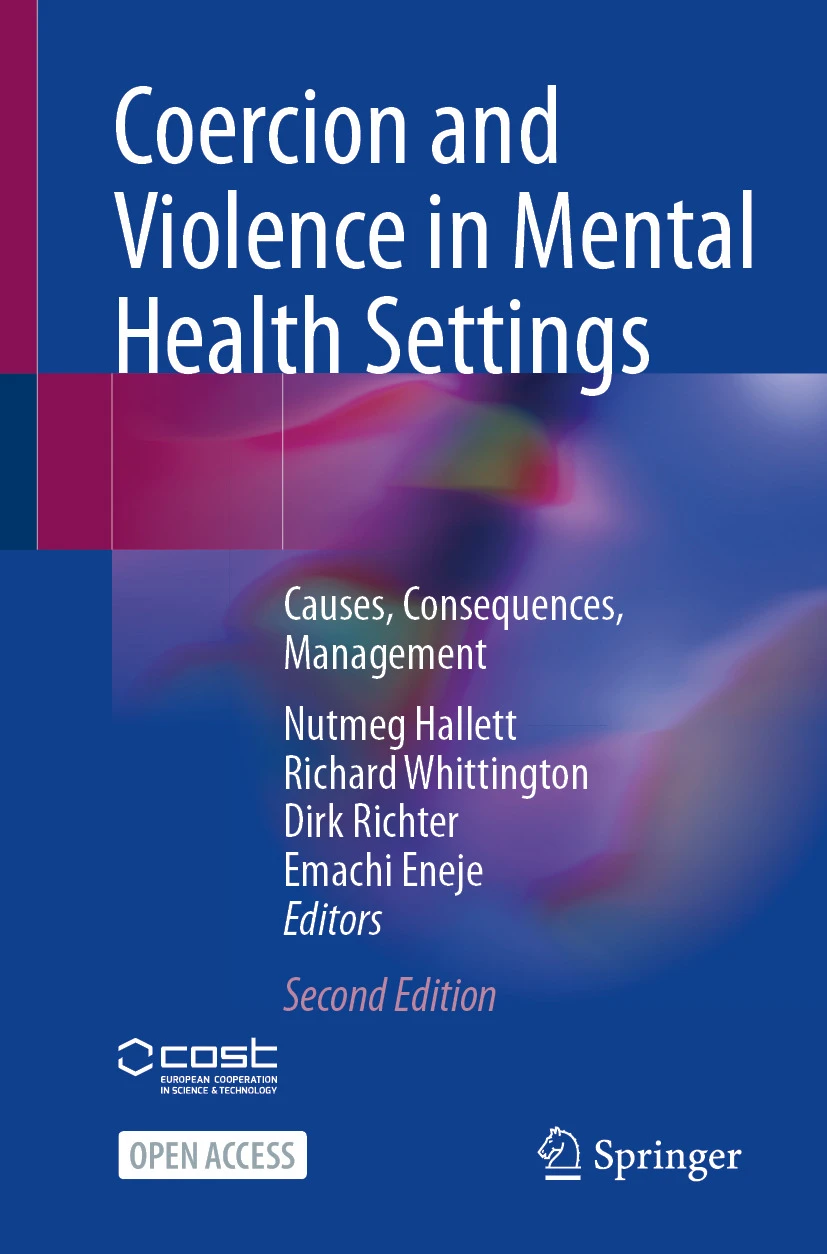
Coercion and Violence in Mental Health Settings
Causes, Consequences, Management Book
Open Access© 2024 - Latest edition
Gallery

Join us to transform mental health for a safer future
By joining EViPRG, you become part of a committed, expert community, shaping the future of mental health care.